Climate Finance Takes Center Stage At Cop30 In Belem Brazil - By Chatula Kangali
- Posted on January 23, 2026
- News
- By Excel Magazine Team
- 586 Views
Summary
The 30th United Nations Climate Conference (COP30) held in Belém, Brazil, marked a significant shift in global climate negotiations, placing strong emphasis on climate finance, market mechanisms, and economic interests. With participation from 193 countries and over 56,000 delegates, the summit highlighted growing reliance on private sector investment, particularly through the New Collective Quantified Goal, which prioritises mobilising US$1.3 trillion annually from private and multilateral sources.
Key outcomes included the absence of a fossil fuel phase-out in the final text, the launch of Brazil’s Tropical Forests Forever Facility to monetise forest conservation, the approval of new global carbon market rules under Article 6.4, and increased tensions between the Global South and the European Union over trade measures such as the Carbon Border Adjustment Mechanism. Overall, COP30 underscored how financial viability is increasingly shaping the pace and direction of the global energy transition.
Zambia’s participation was notable, with the country expanding its Nationally Determined Contributions, joining major climate finance and carbon market initiatives, supporting tropical forest protection, and signing a bilateral Article 6 agreement with Switzerland. Engagements at COP30 also opened access to new funding opportunities under the Fund for Responding to Loss and Damage, reinforcing Zambia’s commitment to climate resilience, green economic transformation, and regional leadership ahead of COP31 in 2026.
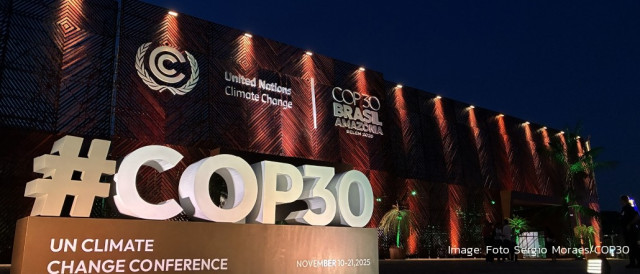
The 30th United Nations Climate Conference (COP30) in Belém, Brazil, concluded with a major swing in climate negotiations, prioritizing financial logic and market control over global solidarity.
According to the United Nations Framework Convention on Climate Change (UNFCCC), the summit saw participation from 193 countries, plus the European Union (EU), with a total of 56,118 delegates registered. This makes COP30 the second largest climate summit in history, behind only COP28 in Dubai, which had over 80,000 attendees.
The largest delegation came from host country Brazil, with 3,805 people registered, followed by China (789), Nigeria (749), Indonesia (566), and the Democratic Republic of the Congo (556). Notably, the United States did not send an official delegation, joining Afghanistan, Myanmar, and San Marino as the only countries not attending.
Zambia was among the almost 193 countries that took part in this year’s climate discussion, with Green Economy and Environment Minister Mike Mposha leading the Zambia delegation consisting of government departments, agencies and Civil Society Organizations.
The conference’s outcomes reflect the growing influence of economic interests in shaping climate policy. The following were the outcomes:
Climate Finance: A Market Based Approach
The New Collective Quantified Goal (NCQG) agreement sets two financing targets: US$300 billion per year in public finance until 2035 and US$1.3 trillion per year to be leveraged through private sector and multilateral banks.
Developed countries secured a limited fiscal commitment, shifting the responsibility to private investors and increasing financial risk for Global South countries.
“Developed countries have effectively passed the buck to private investors, leaving Global South countries vulnerable to financial risk,” said a representative from the G77+China bloc.
Fossil Fuels: Economic Interests Prevail
The final UN text did not include the term “phase-out” of fossil fuels, thanks to Saudi Arabia and Russia’s efforts. The outcome preserves their long-term revenue interests and prevents regulatory progress at the multilateral level.
“Saudi Arabia and Russia have once again demonstrated their commitment to protecting their fossil fuel interests, even if it means compromising the planet,” said a climate activist.
Amazon as an Asset: The Tropical Forests Forever Facility (TFFF)
Brazil launched the TFFF, a financial mechanism compensating forest preservation based on performance. The initiative changes the power dynamics in climate finance, giving local communities direct access to climate capital and a central role in land stewardship.
“The TFFF is a game-changer for forest conservation,” said Brazil’s Minister of Environment. “We’re putting a price on the Amazon’s carbon sequestration capacity, and creating a new revenue stream for local communities.”
Trade Policy: Conflict Between Global South and EU
The BASIC group challenged the European Union’s Carbon Border Adjustment Mechanism (CBAM), denouncing it as green protectionism. The final text formally acknowledges “unilateral trade measures” as a legitimate area of climate negotiation, linking climate policy to trade and industrial policy disputes.
“The EU’s CBAM is a protectionist measure that will harm Global South economies,” said a representative from the BASIC group. “We will not accept it.”
Carbon Markets: New Regulation under Article 6.4
COP30 approved the legal and operational framework for Article 6.4, establishing a global carbon credit market under UN oversight. The rules create legal certainty for transactions and investor liability, aiming to attract speculative capital to carbon removal and forest conservation projects.
“The new carbon market rules will unlock billions of dollars in investment for climate projects,” said a representative from the International Emissions Trading Association.
Final Assessment
COP30 confirms that climate transition depends primarily on capital allocation. The approved funding represents only a fraction of what is needed, leaving poorer countries facing higher debt or remaining underfunded. The fossil fuel sector retains political and institutional power, and the global energy transition will occur selectively, where it is financially viable.
“The Belém Declaration on Green Industrialization signals a shift in strategy by the Global South, seeking to develop local processing capacity for critical minerals and biomass,” said a climate expert. “But will it be enough to address the climate crisis?”
Zambia Stake at COP30
Zambia’s participation in COP30 was quite significant. President Hakainde Hichilema has been emphasizing the need for global unity and urgent action on climate change, highlighting Zambia’s own efforts to address the issue.
Some key outcomes of Zambia’s participation include:
Expanded National Determined Contributions (NDCs):
Zambia expanded its NDCs sectors from three to ten and maintained a 25 percent emissions reduction target, with plans to increase it to 47 percent with external support.
Endorsement of the Future Fuels 4X Pledge:
Zambia joined the coalition, aiming to quadruple global sustainable fuel use by 2035 and promote green industrialization.
Membership in the Coalition on Growing Carbon Markets (CGCM):
Zambia joined the CGCM, focusing on high-integrity carbon markets and climate finance.
Support for the Tropical Forests Forever Facility (TFFF):
Zambia backed Brazil’s TFFF initiative, aiming to protect tropical forests and promote sustainable development.
The Zambian government and the government of Switzerland signed a bilateral agreement under Article 6 of the Paris Agreement, for enhanced cooperation on climate change mitigation and sustainable development.
This agreement will focus on reducing greenhouse gas emissions and promoting green economic transformation. The agreement is part of Zambia’s efforts to deliver on its NDC and contribute to the global effort to combat climate change.
Zambia’s climate targets span ten key sectors, including agriculture, forestry, energy, water, infrastructure, transport, waste management, coal, industrial processes and product use and tourism.
The Minister at the COP30 held a crucial bilateral engagement with Mr. Ibrahima Cheikh Diong, the Executive Director of the Fund for Responding to Loss and Damage (FRLD).
The bilateral engagement focused on the urgent need for predictable financing to help Zambia cope with escalating climate disasters, even as the country works to operationalize its green transition policies.
Mr. Mposha emphasized Zambia’s critical vulnerability, stating that climate change continues to cause devastating economic and social damages across the nation.
Mr. Diong indicated that the debut call for proposals, launched at COP30 in Belém, would make US$250 million available for projects seeking to address a wide range of climate related losses from damaged infrastructure to the loss of community displacement, or cultural heritage among others.
The initial call for funding requests will help test, learn and shape the fund’s long-term model and sends an important signal to least developed and developing countries that support is available for them because they are not the major causes of climate change.
Zambia and other African countries must leverage the Fund by developing national response plans and identifying priorities through processes like NDCs.
Next COP
COP30 has wrapped up, and now the focus shifts to COP31, happening in 2026. Turkey will host the event in Antalya, while Australia will lead the negotiation process, with Climate Change Minister Chris Bowen serving as COP President for Negotiations.
This unique arrangement aims to balance Turkey’s hosting duties with Australia’s expertise in climate negotiations. A pre-COP meeting will be held in a Pacific Island country, focusing on climate financing and resilience in the region.