
2026 World Cup
- Posted on August 31, 2026
- Sport
- By Excel Magazine Team
- 302 Views
BY PAUL SIMPELWE
When FIFA announced that the 2026 FIFA World Cup would expand from 32 to 48 teams, sceptics predicted a bloated tournament that would sacrifice quality for quantity. Critics feared too many mismatched fixtures and a congested calendar.
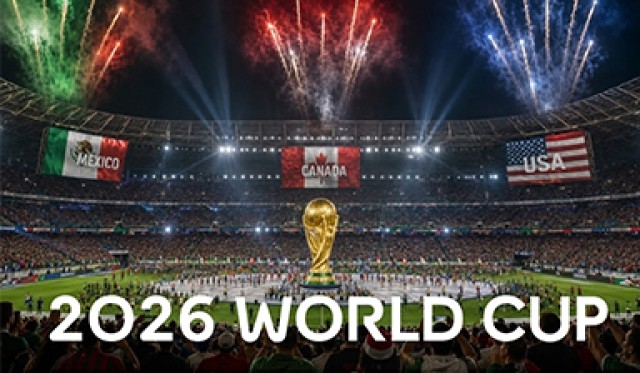
Instead, the tournament co-hosted by the United States of America, Canada and Mexico produced one of the greatest World Cups in history.
With a record 104 matches, new narratives emerged almost daily. Football’s traditional powerhouses still stood tall, but only after being pushed to their limits by ambitious newcomers who refused to play the role of underdogs.
More significantly, Africa announced itself as a genuine force in world football, producing its best collective performance on football’s biggest stage.
A World Cup of New Records
History was rewritten before a ball was even kicked.
The tournament became the largest World Cup ever staged, featuring 48 nations and 104 matches which were both FIFA records. More countries than ever before had the opportunity to compete, opening the door for football’s emerging nations to test themselves against the world’s elite.
Pre-Tournament Favourites: Expectations vs Reality
Before a ball was kicked, the list of favourites looked familiar. Defending champions Argentina arrived with Lionel Messi chasing one more final World Cup triumph, while France returned with the most talented squad hoping to wipe out their disappointment from the previous edition.
Argentina entered the tournament as the team to beat. With the evergreen Lionel Messi leading a talented squad that blended experience with youth. Messi’s brilliance justified the hype as he inspired Argentina back to the final while also climbing to the top of the all-time World Cup scoring charts.
France were once again among the bookmakers’ favourites thanks to the devastating quality of Kylian Mbappé. Having already won the World Cup in 2018 and starred in Qatar 2022, Mbappé carried France’s attacking threat and lived up to expectations, finishing among the tournament’s leading scorers and guiding Les Bleus to the semi-finals.
England arrived with one of the most balanced squads in the competition. While captain Harry Kane remained their proven goal scorer, much of the spotlight fell on midfield sensation Jude Bellingham, whose maturity, creativity and eye for goal made him one of the tournament’s standout performers.
Spain were viewed as dark horses capable of going all the way. Built around the youthful brilliance of Lamine Yamal and the midfield control of Pedri, La Roja combined flair with tactical discipline. Their impressive consistency throughout the tournament eventually carried them to the World Cup final.
Brazil could never be overlooked despite arriving in transition after the Neymar era. Much of the attacking responsibility rested on Vinícius Júnior, whose pace and creativity made him the Selecao’s biggest weapon. However, Brazil fell short of expectations after suffering a shock Round of 16 exit to Norway.
Portugal also entered the tournament with genuine title ambitions. Many viewed this tournament as the last chance for one of the greats, Cristiano Ronaldo to win a World Cup title. Portugal were also looking up to Bruno Fernandes, whose vision and leadership was expected to drive the team.
While the traditional heavyweights largely remained competitive, the tournament demonstrated that reputation alone no longer guarantees success.
Africa’s Rise
If one story defined the tournament beyond the traditional football powers, it was Africa’s rise.
For the first time, Africa fielded ten representatives at the World Cup, and nine of them progressed beyond the group stage, an unprecedented achievement that shattered perceptions about the continent’s competitiveness.
Gone were the days when one African nation carried the hopes of an entire continent as Morocco, Egypt, Ivory Coast, Senegal, Ghana, debutants Cape Verde, Democratic Republic of Congo (DRC), Algeria and South Africa all qualified to the knock-out stage from their respective groups.
Only Tunisia out of the 10 representatives failed to progress but the continent had made its statement.
After becoming Africa’s first ever World Cup semi-finalists in Qatar in 2022, the Atlas Lions of Morocco proved their breakthrough was no accident. They comfortably negotiated a difficult group that included Brazil, Scotland and Haiti before surviving nerve-racking knockout encounters against the Netherlands and co-hosts Canada.
Their reward was another showdown with France, the same nation that had ended their fairytale run four years earlier. Although Kylian Mbappé inspired France to a 2-0 victory, Morocco left the tournament with renewed respect rather than disappointment. Back-to-back deep World Cup runs confirmed that African football now possesses teams capable of consistently challenging the world’s best.
Cape Verde Captures the World’s Imagination
Every World Cup produces an underdog that wins hearts of the fans and in 2026, that team was Cape Verde. Making their World Cup debut, the tiny island nation refused to be overshadowed.
Cape Verde embraced fearless attacking football that captivated neutral supporters across the globe.
Their group campaign alone became one of the tournament’s surprises. Draws against Spain, Uruguay and Saudi Arabia were enough to send them through as one of the best third-placed teams.
Then came the unforgettable clash with defending champions Argentina. For 120 minutes, Cape Verde matched Messi’s side stride for stride. After a 1-1 draw in normal time, both teams exchanged goals in extra time before heartbreak struck in the cruelest fashion imaginable.
A late own goal by Diney Borges handed Argentina a dramatic 3-2 victory, denying Cape Verde a historic penalty shoot-out and a place in the round of 16.
They may have been eliminated early but they departed as the tournament’s favourite underdogs.
Egypt Finally Break Through
Few African moments carried greater emotional significance than Egypt’s long-awaited breakthrough.
Despite appearing at the World Cup on three occasions, the Pharaohs had never won a match on football’s biggest stage. That changed on June 22. A convincing 3-1 victory over Switzerland in their second group match ended decades of frustration and ignited belief throughout the squad.
The team overcame Australia in the round of 32 winning 4-2 on post-match penalties following a 1-1 draw to set up a round of 16 clash with Argentina.
Egypt’s journey ended painfully after surrendering a two-goal advantage in the Round of 16 encounter. The team was less than 10 minutes away from qualifying to the quarter final but late goals from the defending champions broke the hearts of many Africans.
Argentina scored three goals in 12 minutes to win 3-2. The Pharaohs were unlucky after seeing a controversial VAR decision rule out what could have been a decisive goal. The team was leading 1-0 when the goal was ruled out after earlier saving a penalty from Messi.
A Continent Rising Together
Beyond Morocco and Cape Verde, Africa’s strength lay in its collective success.
South Africa, Ghana, Algeria, Ivory Coast and DRC all advanced to the knockout rounds, each showcasing tactical discipline, technical quality and growing self-belief.
For decades, African football has searched for consistency at World Cups and in 2026, it finally arrived.
Rather than relying on isolated success stories, the continent produced depth that suggested its rise is sustainable.
The Race for the Golden Boot
Away from the battle for the trophy, another contest captivated supporters worldwide. The Golden Boot race remained fiercely competitive throughout the tournament.
Heading into the semi-finals, Messi and Mbappé shared the lead with eight goals each, while Norway’s Erling Haaland had already exited with seven.
England’s Bellingham emerged as one of the tournament’s biggest surprises, scoring six goals from midfield same as teammate Harry Kane.
Unlike previous World Cups dominated by a single prolific striker, the 2026 edition produced a scoring race that remained wide open until the closing stages.
Messi also rewrote another chapter of football history.
His tally of 21 career World Cup goals elevated him above Germany’s Miroslav Klose, whose record of 16 had stood for more than a decade. Mbappé, meanwhile, climbed to 20 goals, signaling that football’s greatest scoring rivalry is far from over.
The Giants Still Stand
Despite the rise of football’s emerging nations, the established powers ultimately reminded everyone why they remain among the world’s elite.
France, Spain, England and defending champions Argentina formed a heavyweight semi-final lineup, the first time since 1990 that those four footballing giants occupied the final four together.
But none enjoyed an easy passage. England survived stern tests against Mexico and Norway.
France had to overcome an inspired Morocco. Argentina required every ounce of experience to eliminate Cape Verde and later Egypt.
Spain quietly negotiated one difficult knockout tie after another with the composure of champions.
The tournament revealed that the traditional powers remain supreme, but the narrow margins are fast closing up.
The Fans Who Became the Tournament’s Heartbeat
Beyond the goals and the stars, the 2026 FIFA World Cup belonged just as much to the fans. From the opening match to the closing weekend, stadiums across the United States, Canada and Mexico became vibrant festivals of colour, music and culture.
No supporters captured the imagination quite like Norway’s travelling faithful. Returning to the World Cup after years in the wilderness, thousands of Norwegian fans transformed every match into a sea of red, white and blue.
Their trademark Viking chants echoed around packed stadiums, but it was their synchronized rowing celebration that became an instant global sensation. During matches, supporters mimicked rowing longboats in unison while chanting “Heia Norge,” creating the illusion of a Viking fleet sailing through the stands. Television cameras regularly cut to the spectacle to capture the moments.
Equally unforgettable was the return of the Mexican Wave. Although the famous stadium celebration has been part of football folklore for decades, nowhere did it feel more fitting than in its country of origin. Mexican supporters sparked wave after wave that swept through packed arenas regardless of which teams were playing.
Elsewhere, Argentine supporters filled stadiums with deafening versions of their now-famous terrace songs, Moroccan fans lit up venues with drums and nonstop chants, while England’s travelling army entertained their team through every knockout round. African supporters arrived in colourful traditional attire, waving giant flags and dancing to the rhythms of drums and vuvuzelas, adding a unique flavour to the tournament atmosphere.
In the end, the 2026 FIFA World Cup was not only remembered for the football played on the pitch but also for the unforgettable scenes in the stands.
The Final
The curtain came down on a historic 2026 FIFA World Cup with Spain crowned world champions for the second time in their history after edging Argentina 1-0 in the final at New York New Jersey Stadium.
In front of a capacity crowd of 80,000 fans and millions watching around the globe, the two footballing giants produced a tactical masterclass. Spain dominated possession for long spells while Argentina relied on quick transitions and the individual brilliance that had carried them to a second successive World Cup final.
With neither side able to find a breakthrough in regulation time, the contest stretched into extra time, where Spain finally found the decisive moment. Substitute Ferran Torres struck the all-important goal just one minute into the second half of extra time to break the hearts of the Argentines.
The goal sparked jubilant players and supporters, while Argentina pushed desperately for an equaliser but were repeatedly denied by Spain’s resolute defense.
After a month-long competition, the first 48-team FIFA World Cup delivered dramatic upsets, record attendances (over 6 million) and unforgettable memories.
Spain’s triumph completed an impressive campaign that saw them eliminate Belgium, France and finally Argentina on their way to lifting football’s biggest prize.
Ends….