
Davies Kabuswe: The Story Of Innovation, Resilience, And Vision
- Posted on April 14, 2026
- Cover feature
- By Excel Magazine Team
- 481 Views
Davies Kabuswe’s story is a powerful testament to innovation, resilience, and vision. Growing up in Chililabombwe, he was shaped by the discipline of education and the hard work of Zambia’s mining communities. From an early fascination with electronics—often building and dismantling radios—he developed a curiosity that would later define his entrepreneurial journey.
After pursuing a career in Land Economy and Finance, and holding key roles in real estate, telecommunications, and investment management, Kabuswe made a bold transition into media. He founded Sun FM Radio in Ndola, identifying a gap for inclusive and dynamic broadcasting. Through innovation, he expanded into television with Sun TV, launched SunSports TV, and built a diversified media group under Sun Broadcasting Holdings Limited.
Despite facing financial constraints, industry skepticism, and operational challenges, he remained steadfast, using strategic thinking and resilience to grow a nationally recognized and award-winning media enterprise. His work has not only transformed Zambia’s media landscape but also created jobs, supported creatives, and amplified community voices.
At its core, his journey reflects the importance of curiosity, calculated risk-taking, and purpose-driven entrepreneurship. Kabuswe defines success not just by financial gain, but by legacy, impact, and the ability to inspire and empower others.
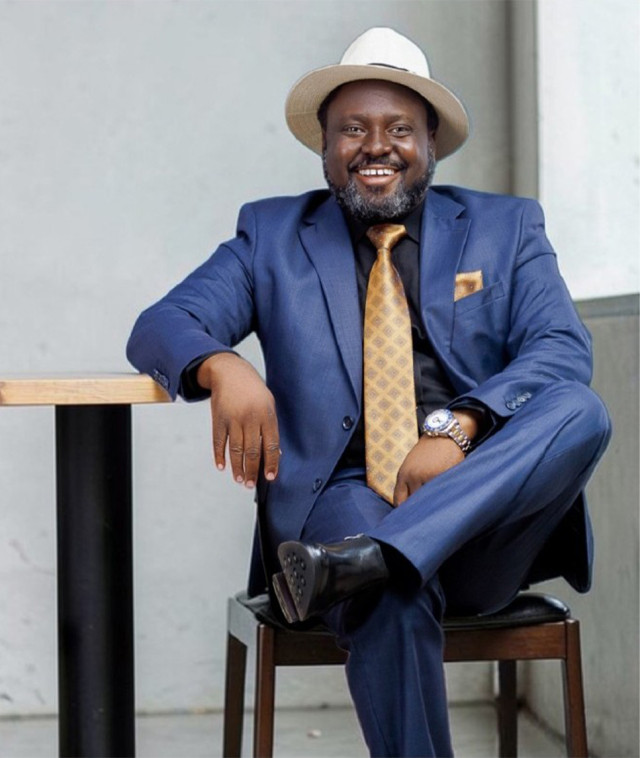
BY DAVIES KABUSWE
I was born in the quiet yet industrious border town of Chililabombwe, where the rhythm of life was shaped by both the resilience of mining communities and the discipline of education. As the eighth in a close-knit family of ten, I grew up in a home defined by hard work and aspiration. My father, a dedicated miner, embodied the grit and endurance of Zambia’s Copperbelt, while my mother, a teacher, instilled in me the enduring value of knowledge, structure, and ambition. This unique blend of influences would later become the foundation of my personal and professional journey.
My early years were spent navigating the formative corridors of Kamenza Basic School, where I began my primary education from Grade 1 to 4, before progressing to Kakoso Primary School for Grades 5 to 7. These formative stages not only shaped my academic grounding but also nurtured a curiosity and determination that would define my later pursuits. I continued my secondary education at Chililabombwe Secondary School for my junior years, before moving to Hillcrest Technical Secondary School, where I completed my senior secondary education in a new environment that broadened my perspective and ambition.
My academic journey advanced at the prestigious Copperbelt University, where I earned a Bachelor of Science in Land Economy, followed by a Master of Business Administration in Finance. Always driven to deepen my expertise, I further pursued specialized training in Social Protection and Pension Fund Administration at Eastern and Southern African Management Institute in Arusha, and expanded my global outlook with studies in Corporate Valuation in London.
Even as my academic path took shape, my curiosity had long been ignited far beyond the classroom. As a child growing up in Chililabombwe, I developed an unusual fascination with media and electronics—one that set me apart early on. While other children played, I spent hours experimenting, often building makeshift radios from discarded telephone receivers and old radiogram parts. What began as simple curiosity soon evolved into a remarkable hands-on understanding of how things worked.
I recall dismantling radio cassette players and television sets piece by piece, driven by a need to understand their inner workings. What made this even more striking was my ability to reassemble them flawlessly—each device springing back to life as though untouched. Though my father often punished me for taking apart household electronics, my determination never wavered. If anything, the resistance only deepened my resolve to learn, experiment, and master the craft on my own terms.
By the time I was preparing to enter the Copperbelt University, my technical instincts were already well developed. Initially inclined toward pursuing electronics, a pivotal conversation with a family friend shifted my trajectory. Recognizing that I had already cultivated substantial practical knowledge in the field, I was encouraged to pursue a different discipline—one that would broaden my horizons rather than duplicate what I had already taught myself.
Taking this advice to heart, I enrolled in the School of the Built Environment, where I studied Land Economy. This decision proved transformative, equipping me with expertise in real estate, investment analysis, property development, and valuation—skills that would later define my professional impact.
During my university years, I gained practical industry exposure through short stints at ZCCM Konkola Division during industrial breaks, grounding my academic knowledge in real-world application. Upon graduation, I joined Bitrust Real Estate, where my diligence and leadership saw me rise to the position of Head of Property Management.
My career trajectory continued upward when I joined MTN Zambia as Property Coordinator. There, I played a key role in a landmark phase of national infrastructure expansion, contributing to the rollout and installation of over 400 telecommunications towers across the country—an initiative that significantly enhanced connectivity nationwide.
I later transitioned to the National Pension Scheme Authority, where I served as Investment Manager (Properties). In this capacity, I spearheaded several high-impact developments, including the iconic Levy Mall in Lusaka, as well as large-scale housing projects comprising 438 housing units in Kalulushi and 220 housing units in Lusaka.
My entrepreneurial journey is, in many ways, a return to the curiosity that defined my childhood—only this time, it found expression on a national scale. My fascination with media never faded; it evolved. From my early experiments with homemade radios, I gradually immersed myself in the world of broadcasting, joining radio fan clubs and building relationships with industry players—radio presenters, producers, and station owners—who would later become part of my broader network and inspiration.
Even while serving as Investment Manager at the National Pension Scheme Authority, the pull toward media remained strong. What began as a passion steadily transformed into a vision. Recognizing both an opportunity and a personal calling, I made the bold decision to venture fully into broadcasting. I began assembling radio equipment piece by piece, drawing from both my technical instincts and business acumen, and laid the foundation for what would become a media powerhouse.
This vision materialized with the launch of Sun FM Radio in Ndola—the first radio station in the city. At the time, I had identified a clear gap not only in Ndola but across the Copperbelt Province: the absence of a dynamic, inclusive radio platform that could resonate with all generations. Sun FM was built on this principle—diversity in content, inclusivity in audience, and innovation in delivery.
What started as a single station on the Copperbelt quickly grew into a dominant voice along Zambia’s Line of Rail, stretching from Chililabombwe to Livingstone. Sun FM distinguished itself through vibrant programming, strong audience engagement, and an unwavering commitment to quality. In time, it became the epitome of modern Zambian radio—earning numerous accolades and establishing itself as the most awarded radio station in the country, with recognition both locally and internationally.
Never one to settle, I pushed the boundaries of traditional broadcasting. Inspired by global trends and driven by innovation, I pioneered the transformation of radio from a purely audio experience into a visual one. This ground-breaking concept—“Radio on TV”—led to the creation of Sun TV, making Sun FM the first in Zambia to successfully integrate radio broadcasting with television.
Building on this momentum, I identified another gap in the media landscape: the lack of a dedicated local sports channel. This insight led to the launch of SunSports TV, further diversifying my media footprint. At the same time, I expanded into community-focused broadcasting with the introduction of Konkola Radio in my hometown, reinforcing my commitment to grassroots engagement.
As these ventures flourished, it became clear that a broader corporate structure was needed to sustain and scale the growing media enterprise. This led to the formation of Sun Broadcasting Holdings Limited—the parent company under which multiple ventures would thrive. From this foundation emerged a suite of complementary businesses: Sun Records, dedicated to nurturing and promoting musical talent; AdCentro, providing strategic advertising solutions; and Daily News, an online platform expanding the group’s footprint into digital journalism.
Being recognized as an extraordinary entrepreneur is, for me, less about personal acclaim and more about purpose, responsibility, and impact. It represents a journey defined not by comfort, but by risk, resilience, and an unwavering belief in possibility. To me, the recognition affirms the courage to pursue unconventional ideas, to trust instincts shaped from childhood curiosity, and to remain committed to building something that outlives individual success. It is a reminder that true entrepreneurship is not just about creating businesses, but about shaping industries, opening doors for others, and leaving a meaningful imprint on society.
However, the journey was not without its challenges. In the early years, I faced significant skepticism from both industry players and stakeholders who questioned the viability of merging radio with television. There were financial constraints, limited access to advanced broadcasting equipment, and the constant pressure of sustaining operations in a competitive and evolving market. At times, the vision seemed ahead of its time, requiring not just investment, but belief—often in the absence of immediate validation.
Operational hurdles also tested my resilience. Building a team that could adapt to a new way of broadcasting, training talent to perform both on-air and on-screen, and maintaining consistent quality across platforms required persistence and continuous learning. There were moments of uncertainty, where growth had to be carefully balanced with sustainability.
Yet, these challenges became the very foundation of the station’s strength. I overcame them through strategic reinvestment, partnerships, and a commitment to innovation. I leaned on my multidisciplinary background—combining technical curiosity, financial expertise, and entrepreneurial instinct—to navigate obstacles and refine the model. Most importantly, I remained steadfast in my belief in the vision, even when the path was unclear.
Perhaps my boldest move was leaving the security and structure of a high-level investment role at the National Pension Scheme Authority to fully commit to an industry known for its volatility. At the time, this decision carried significant financial and reputational risk. Media, particularly private radio, required heavy upfront investment with no guaranteed return. Infrastructure costs, licensing, content production, and staffing all demanded capital and resilience. Yet I leaned into the uncertainty, treating risk not as a deterrent, but as a strategic variable to be managed.
I approached this transition with the mindset of both an investor and a creator. Where others might have seen expense, I saw long-term value. Where others feared unpredictability, I identified patterns of growth. This dual lens enabled me to turn risk into opportunity—building scalable platforms, reinvesting revenues, and expanding strategically into television and digital media through ventures like Sun TV and SunSports TV.
Balancing the precision of investment management with the dynamism of media has been one of my defining strengths. On one hand, my background in finance and property investment instilled discipline—data-driven decision-making, risk assessment, and long-term planning. On the other, the media space demanded creativity, speed, and an intuitive understanding of audience behaviour. Rather than viewing these as opposing forces, I fused them. Every creative idea is evaluated through an investment lens, and every investment decision is informed by audience insight. This balance has allowed me to build a media enterprise that is not only innovative, but sustainable.
The impact of my work extends far beyond business success. Through Sun FM Radio and its affiliated platforms, I have influenced millions of listeners and viewers, shaping public discourse, promoting local music, and creating a platform for voices that might otherwise go unheard. My stations have become cultural hubs—spaces where communities engage, celebrate, and stay informed.
Economically, my ventures have created employment opportunities across broadcasting, production, marketing, and technology. Initiatives under Sun Broadcasting Holdings Limited—including Sun Records and AdCentro—have supported artists, empowered creatives, and provided businesses with platforms to grow. In doing so, I have contributed meaningfully to Zambia’s entrepreneurial ecosystem, demonstrating that media can be both culturally impactful and economically viable.
My journey also highlights a broader truth about African entrepreneurship: that local insight is a powerful competitive advantage. As a Zambian entrepreneur, I understand the nuances of my market—the language, the culture, the aspirations of the people. This authenticity allows me to create content and businesses that resonate deeply at home, while remaining scalable across the continent. In today’s Africa-wide market, where audiences are increasingly interconnected yet culturally distinct, this ability to localize while expanding is invaluable.
Moreover, operating from Zambia has taught me resilience, adaptability, and resourcefulness—qualities that are essential in navigating emerging markets. Limited resources often demand greater innovation, and regulatory environments require strategic agility. These experiences have not only strengthened my enterprises but positioned me to compete and collaborate across Africa with confidence.
Like many entrepreneurial journeys, my path has not been without significant setbacks—and one of my most defining challenges came in the early stages of building Sun FM Radio. What began as a bold vision quickly ran into the harsh realities of capital constraints, operational pressure, and industry skepticism.
There were moments when sustaining cash flow became a daily battle—when advertising revenues were inconsistent, operational costs were high, and the burden of keeping the station on air rested heavily on limited resources.
At one point, the very survival of the station was uncertain. Expansion ambitions had to be slowed, difficult financial decisions had to be made, and there were instances where belief had to carry the vision further than balance sheets could justify. It was a period that tested not just my business acumen, but my personal resolve.
From this setback came some of my most important lessons. First, that sustainability is as critical as innovation—no matter how powerful a vision is, it must be grounded in financial discipline. Second, that resilience is not just about enduring difficulty, but about adapting quickly—refining strategy, restructuring operations, and making tough decisions when necessary. And perhaps most importantly, I learned that belief must be supported by systems: strong teams, efficient processes, and a clear long-term roadmap.
I am also betting on the power of integrated ecosystems—where media, advertising, music, and digital platforms work together to create value. This is reflected in the broader vision of Sun Broadcasting Holdings Limited, which continues to expand beyond conventional boundaries into a fully integrated media and communications group.
For me, success is not defined by financial growth alone. While profitability is essential, it is not the ultimate measure. True success lies in legacy—the ability to build institutions that outlast their founders, to create platforms that empower others, and to contribute to social transformation. It is seen in the artists who find their voice through my platforms, the young professionals who build careers within my companies, and the communities that feel represented and connected through my content.
As a role model to many aspiring entrepreneurs, my advice to young Zambians is both simple and profound: start where you are, with what you have—but think beyond where you are. I emphasize the importance of curiosity, discipline, and patience. I encourage young people to embrace failure as part of the process, to invest in knowledge, and to remain consistent even when results are not immediate. Above all, I urge them to build with purpose—to create businesses that solve real problems and add genuine value.
If I were to speak to my younger self—the boy dismantling radios in Chililabombwe—my message would be clear: trust your curiosity—it is your greatest gift. The things you are drawn to today, even when they seem small or misunderstood, are shaping your future. Stay patient, stay disciplined, and don’t be afraid to take risks. The journey will not be easy, but it will be worth it.
In many ways, that message still defines me today—a reminder that extraordinary journeys are often built on ordinary moments of curiosity, courage, and conviction.